
14 martie 2026
Collaborative Genomic Research on Genetic Variations for Cardiovascular Health in Eastern Europe
PNCDI IV Program 5.8 - European and International Cooperation
Sub-program 5.8.3 - Bilateral/Multilateral
Project type: Complex bilateral projects with the Republic of Moldova
Contract no: 15PCBROMD ⁄ 2025
Project code: PN-IV-PCB-RO-MD-2024-0303
Acronym: CardioGen
Project duration: 01.09.2025 - 31.08.2027
Project partners
- Coordinator: Spitalul Clinic de Urgență București (SCUB)
- Partner: Technical University of Moldova (UTM)
Project Director
Dr. Miruna Mihaela Micheu, PhD, Cardiologist, Senior researcher
SCUB research team
- Dr. Miruna Mihaela Micheu, PhD, Cardiologist, Senior researcher;
- Dr. Nicoleta-Monica Popa-Fotea, Cardiologist, Postdoctoral researcher;
- Dr. Maria-Amalia Petre, Cardiologist, PhD student.
SUMMARY

Cardiovascular diseases (CVDs) pose a major health issue globally, with Romania and Eastern Europe particularly affected. While lifestyle and environmental factors are established contributors, genetic predisposition remains an underexplored area in these populations. The CardioGen project aims to fill this gap by examining how genetic variations affect cardiovascular health in Romania and Eastern Europe, using local and publicly available Western European data.
Central to this effort is establishing a robust Romanian-Moldovan research partnership focused on studying genetic variation in underrepresented Eastern-European populations. Through this collaboration, the project will contribute to both advancing cardiovascular genetics research and strengthening regional capabilities. To achieve this, we propose three specific aims:
- Comparative analysis of genetic variants using targeted and whole genome sequencing data from Romanian and European cohorts;
- Assess the functional and phenotypic impact of genetic variants in CVD-related genes;
- Sequencing Kernel Association test for joint genetic variant analysis.
The implementation of this project will significantly advance our understanding of CVD genetics, allowing for more accurate diagnosis, precise risk stratification, and tailored patient management.
COGNITIVE AND SOCIO-ECONOMIC IMPACT
The Collaborative Genomic Research on Genetic Variations for Cardiovascular Health in Eastern Europe project aims to generate significant cognitive and socio-economic benefits by advancing knowledge, strengthening research capacity, and improving public health outcomes across the region.
Cognitive Impact. The project contributes to the scientific understanding of genetic variations associated with cardiovascular diseases in Eastern Europe, a region that remains underrepresented in global genomic datasets. By integrating genomic analysis with clinical and population data, the research will expand the current knowledge base on disease susceptibility, risk stratification, and potential therapeutic targets.
The collaboration among multidisciplinary teams - including clinicians and bioinformaticians - will foster knowledge exchange and methodological innovation. The project will also support the training of early-career researchers, doctoral students, and medical professionals in genomic medicine, data science, and translational research. Through publications, open scientific communication, and participation in international networks, the project will contribute to the advancement of cardiovascular genomics research.
Socio-Economic Impact. Cardiovascular diseases remain one of the leading causes of mortality in Eastern Europe, placing a substantial burden on healthcare systems and national economies. By identifying population-specific genetic risk factors, the project will support the development of more effective prevention strategies, early diagnostic tools, and personalized therapeutic approaches.
Additionally, the project promotes responsible data sharing, ethical standards in genomic research, and increased public awareness of cardiovascular health and genetic risk factors. These efforts contribute to more informed healthcare policies and a more resilient, knowledge-based society.
RESULTS
Compilation of the ECD-PD dataset ECD-PD (European cardiac disease public datasets).
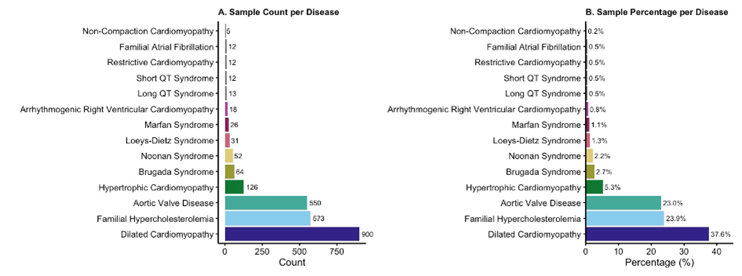
Figure 1. Distribution of samples by type of cardiac disease in the analyzed cohort: (A) absolute number of samples;
(B) relative percentage of the total number of samples.
Characterization of the ECD-PD dataset metadata.
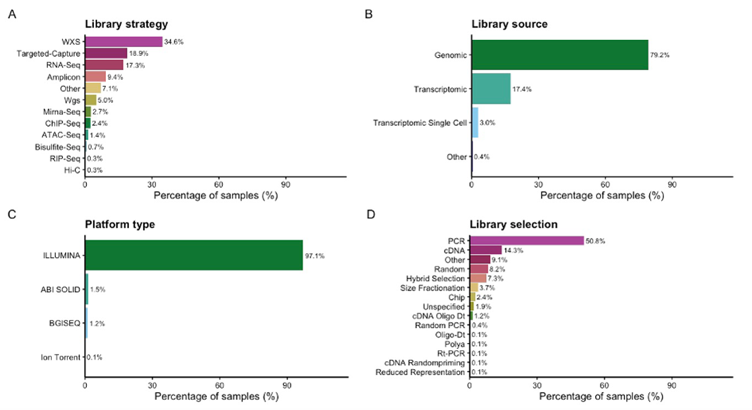
Figure 2. Technical characteristics of the samples in the ECD-PD dataset, including library strategy (A),
library source (B), sequencing platforms (C), and library selection method (D).
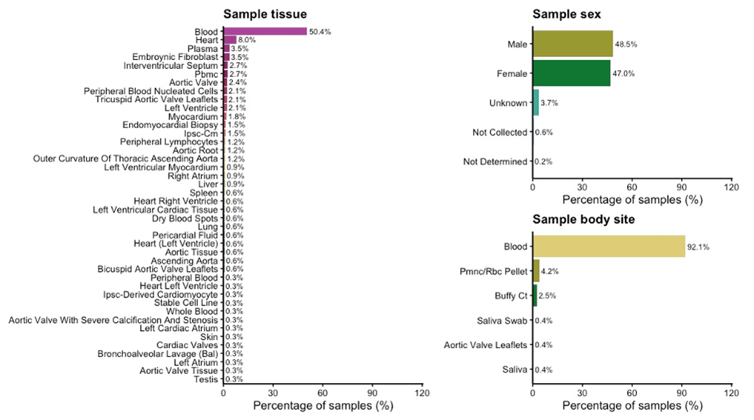
Figure 3. Distribution of samples according to tissue type (A), donor sex (B),
and biological source of the samples (C) in the ECD-PD dataset.
Evaluation of data pre-processing tools.
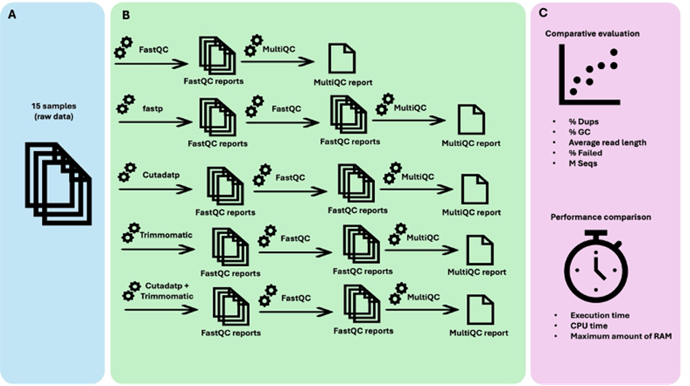
Figure 4. Schematic representation of the benchmarking design for the pre-processing steps: (A) raw data (SRA project PRJNA393768);
(B) parallel pre-processing workflows compared; (C) evaluation criteria used, including both data quality metrics and computational performance indicators.